
How to Get Court Records
Seward County court records requests start with three things. Name the court, the case number, and the product you want. The Kansas CaseSearch public portal covers district case information and its events index. Some public documents are not online. Kansas Supreme Court Rule 22 then opens a second level of access at a courthouse terminal. The District Court clerk counter handles file inspection, copies, certification, and older records. A quick call can confirm routing and fees. A mailed request works too. It gives the custodian a clear description of what you actually want.
The statewide court-record request form lists email, mail, pickup, or fax as delivery options. The Seward clerk should confirm which methods it takes. The published directory lists no clerk email. Official pages also show conflicting fax numbers, so call first if a fax is time-sensitive. One caution applies. The county KORA form belongs to county administration, not to a District Court case file.
- Identify District Court, Liberal Municipal Court, an appellate court, or a federal court as custodian.
- Use the official search to obtain the case number and exact event, order, pleading, or judgment name.
- Check CaseSearch, then use the Rule 22 terminal or clerk counter if public material is absent online.
- Submit a narrow written request stating whether a plain, certified, sealed, or exemplified copy is needed.
- Ask for the fee estimate, delivery method, and expected completion time before paying.
Seward Court Record Custodians
The Clerk of the District Court keeps Seward County court records across many case types. These span district criminal, civil, domestic-relations, probate, small-claims, and jury cases. They also include state, highway, and Sheriff traffic matters. Donna L. Odneal is the clerk named in the official directory. For general questions, call 620-626-3375. Topic lines split the work further: 620-626-3234 for civil, domestic, marriage-license, small-claims, and jury matters; 620-626-3232 for traffic; and 620-626-3204 for probate.
The County Clerk is a different officer based at the county administration building. That office runs elections, commission material, tax levies, and county open-records administration. Its page sends court questions back to District Court. The jail and Community Corrections cannot help either. Know this custody map. It keeps a records request from dying in an office that cannot certify the case file.
Seward County District Court Clerk
415 N. Washington, Suite 103
Liberal, KS 67901
620-626-3375
Monday through Friday, 8 a.m. to noon and 1 p.m. to 5 p.m.
Visitors can simply ask at the counter where the public terminal sits. The clerk posts no terminal number or queue rules, so confirm current arrangements in person.
Types of Court Records
Not every piece of a Seward County court record is the same product. At the base sits the register of action. It is the brief case information and activity history defined by Kansas Supreme Court Rule 106B. The portal may label its chronological portion an events index or case events. A full case file is bigger, holding pleadings, notices, orders, and judgments. Just remember this. Not every document image you could view at the courthouse appears on the public internet portal.
- Registers of action and case-event histories
- Complaints, petitions, answers, motions, and other pleadings
- Journal entries, signed orders, judgments, and dispositions
- Public civil, criminal, probate, domestic, small-claims, and traffic files
- Plain copies, clerk-certified copies, and separately ordered transcripts
A portal result helps you locate a record, but it is not an official certified copy. Transcripts are separate again from a register or a pleading. For those, the District Court directory lists the transcriptionist line at 620-626-3235, and local Rule 113 sends written transcript requests through the presiding judge to the reporter or transcriptionist.
Seward Register and Document Layers
A good request names the layer you need. The public index may show the case, court, parties, filing date, assigned judge, status, and hearing information. The register of action then gives a short chronological account. A document image carries the actual text of the filing or ruling. Certification adds the clerk's statement or seal to whatever copy you requested. Each layer answers a different question. Treat them as distinct rather than interchangeable.
Say CaseSearch shows an event but no image. Note the event title and date, then check the courthouse terminal. Still nothing? Ask what the item is. It may be a paper file, an archived record, a terminal-only public document, or material restricted by rule or order. A request for "all records" often needs clarification before staff can act. A case number, filing year, case type, document name, and copy form give them a workable search. The Seward County archive index shows how local government material can follow its own archive route.
That county archive cannot substitute for the District Court clerk's search of an older judicial file.
What a Court Record Contains
What a Seward County court record contains depends on the case type. Its access status matters too. Think of the register as a concise map rather than a full narrative. It points to events and documents. But an event label alone may not reveal the complete terms of an order. Read entries by date. Keep a filing distinct from the judge's later ruling on it.
| Case identity | Case number, court, case type, filing date, caption, and current status when public. |
|---|---|
| People and roles | Public party names, attorneys, and assigned judicial officer, subject to access and redaction rules. |
| Register of action | A brief chronological history that the portal may label events index or case events. |
| Filed papers | Complaints, petitions, answers, motions, notices, and attachments that are public and available. |
| Court action | Hearings, continuances, journal entries, orders, judgments, and dispositions. |
| Access limits | Sealed documents, protected identifiers, and records excluded from public internet access. |
Rule 106B warns that public-access information is not the official court record. When exact language matters, request the filed order or a certified copy instead of trusting a summary label.
Seward Rule 106B Requests
Seward County court records sit under judicial-branch access rules. The statewide request form carries a KORA title all the same. The label matters less than the rules that govern. A complete request names Seward County District Court. Add a case number when known, plus the case type or approximate year. Then state the exact register, order, judgment, pleading, or file you want to inspect. Say whether the copy must be plain, certified, or exemplified. Also say how you want delivery.
Add your name, mailing address, phone, email, signature, and date. Ask up front what copying, certification, postage, redaction, or research will cost. Under K.S.A. 45-219, reasonable or actual copy costs may apply. You may request an itemized statement. Judicial-branch court-record rules may still control. Advance payment can be required once an estimate is issued.
The county's official FAQ also helps you tell the court apart from other justice offices.
Routing matters here: the court, county administration, the jail, and the municipal court each hold different records.
Certified Copies and Fees
A plain copy simply reproduces the record. A certified copy comes from the clerk bearing the certification you request. It is what another office wants when it needs proof from the court. An exemplified copy may carry added authentication on top. Seward County District Court publishes no specific fee for these products. Ask for an estimate before ordering. Confirm the certification format, whether an original seal is needed, and whether pickup or mail is required. Never borrow Liberal Municipal Court prices for a district case.
| Record product | Published amount or next step |
|---|---|
| Kansas CaseSearch register viewing | No charge stated; not a certified record |
| Seward District Court plain copy | No local amount located; request an estimate |
| Seward certified or exemplified copy | No local amount located; confirm certification and delivery charges |
| Transcript | No amount located; contact the reporter or transcriptionist route |
| Liberal case summary or clearance letter | $5 under the separate municipal procedure |
| Liberal other copies | $0.50 per page; staff time may apply at two hours or more |
Seward District Court publishes no turnaround time for copies. When the estimate arrives, ask about timing too, especially for an older file, a large request, or a record needing redaction.
Liberal Municipal Record Copies
Liberal Municipal Court keeps its own city records for ordinance, traffic, and municipal misdemeanor cases. Written requests go to the Municipal Court Director or the court clerks. Inspection is allowed during stated city hours. The published procedure sets a $5 charge for a case summary or clearance letter. Copies run $0.50 per page, and actual staff time applies once a request takes two or more hours. Prepayment may be required after an estimate. A Liberal request should identify the municipal case or citation. Give the approximate date and the exact document too. Ask about certification separately. The city's posted prices should not be assumed to cover every certified product. The city also lists restricted categories. These include expunged records or diversions, treatment records, unserved warrants and affidavits, protected victim details, and protected locations. The official Liberal appeals page shows when a municipal case can move into Seward County District Court.
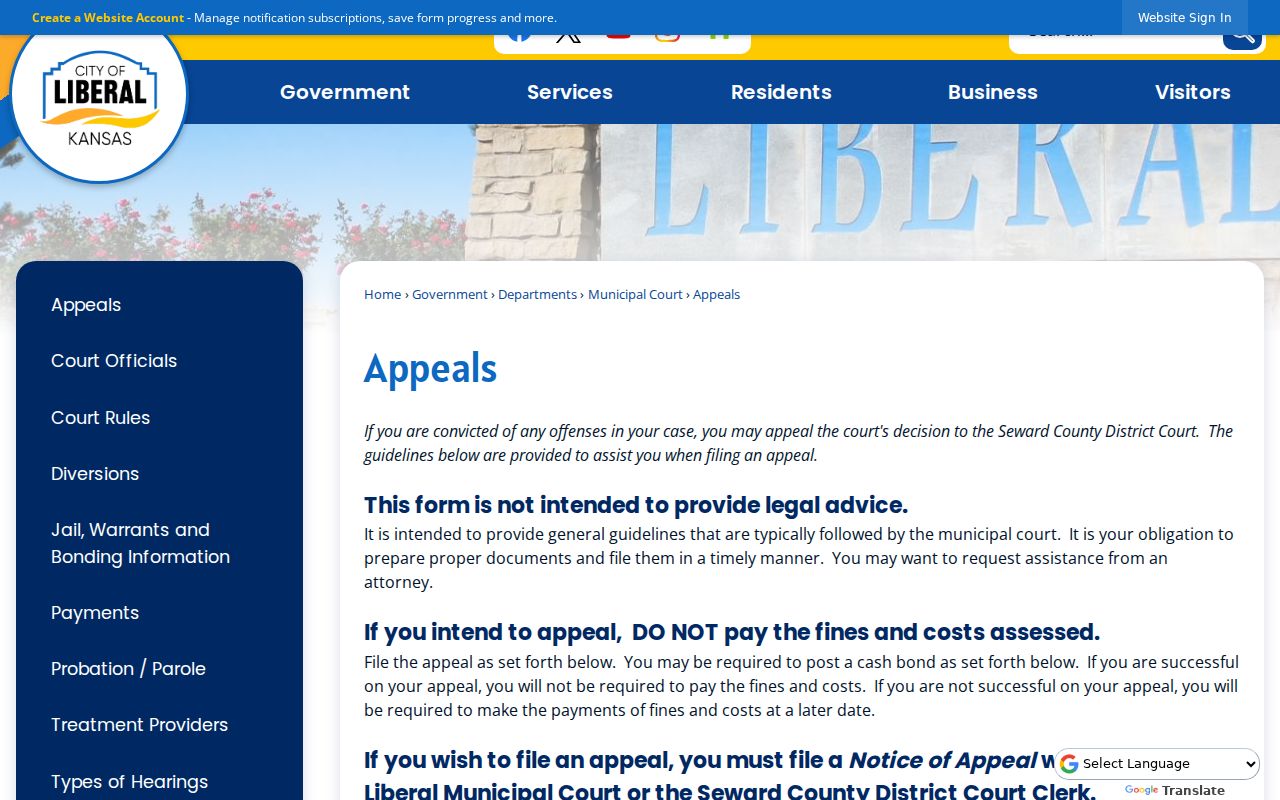
An appeal opens a district-court path for the case. The municipal portal does not become the district register.
Public Access and Sealed Records
Public does not always mean online. Kansas Supreme Court Rule 22 treats internet access and courthouse-terminal access as separate things. Some public Seward County court records may be left off the internet yet still viewable at the court terminal. Sealed and nonpublic material stays closed through both. Rule 24 protects full birth dates, account numbers, certain home addresses, victim or minor data, biometric information, and other sensitive content. Rule 25 governs expanded access for authorized users rather than ordinary public browsing.
Juvenile matters, some family information, sealed records, and protected documents call for care. A public register does not defeat a sealing order. It also does not turn every filed paper into an internet document. If a request is denied or redacted, ask which statute, rule, or order applies and whether a public register or redacted copy can be released.
Key Kansas access rules:
Rule 22 establishes public portal and courthouse-terminal access while excluding specified records and bulk compilation.
Rule 24 requires protection of personally identifiable information in court filings.
Rule 106B defines the register of action and case-by-case public access.
Use only the details needed to locate the case. Never put a Social Security number, full driver-license image, or other needless private data into an unsecured request.
Older Seward Court Record Searches
Older Seward County court records may predate the current eCourt conversion. Some lack a complete internet image set. Digitization is not guaranteed for every file. Give the District Court clerk an approximate year and the case type. Add a party or business name, the court, and the exact record you need. The clerk can tell whether the register sits on the public terminal. The clerk can also say whether a paper file must be retrieved. A court reporter may hold a transcript instead. Archived county commission material belongs to county administration. An older judicial file stays with the court itself. A narrow request cuts the chance of delay for clarification or an impermissible compiled search. Remember that a blank online result does not prove anything. The older public court record may still sit in the clerk's files.